


Can I use WD40 to spray my reels or would it cause any problems?

In reply to Post #1
Doesn't wd40 remove oil or grease ?? I'm sure I was told it wasn't good for bike chains etc so it may not be ok for reels
EDIT
Just found this
Because WD-40 is a degreaser, it breaks down grease and oil. Never use it to lubricate a reel. The basic rule of thumb is to grease gears and oil everything else — sparingly. Too much grease and oil impede the spool and reduce casting distance.
Doesn't wd40 remove oil or grease ?? I'm sure I was told it wasn't good for bike chains etc so it may not be ok for reels
EDIT
Just found this
Because WD-40 is a degreaser, it breaks down grease and oil. Never use it to lubricate a reel. The basic rule of thumb is to grease gears and oil everything else — sparingly. Too much grease and oil impede the spool and reduce casting distance.
What oil do I use and how do I oil a reel please?

In reply to Post #3
Shimano do their own range which of course they recommend for their reels.
For all round / all reels the Penn range is good
Shimano do their own range which of course they recommend for their reels.
For all round / all reels the Penn range is good

Today I have internally and externally given my x3 shimanos it's twice yearly mini service
I put 4 drops of Mill tackle pin oil in the oil port
I put the same oil ,one drop on the two bail arm screw points,drop of oil on the roller in the bail arm drop of oil in the handle ,next to the actual handle I mean..
Clean grease on reel shaft,reapply.
Clean grease off of the drag ,where it touches the spool,washers..
Then I spray some Wurth silicone into a micro fibrecloth and buff up my reels
I avoid WD40 ,it's a degreaser as such it may loosen something but not a true lubricant
Also never wipe your rods down with WD40 ,I've seen the utter carnage of a WD'd mk1 armalite..omg..
Oh yes ,a small smear of grease on the thread of the shafts which accepts the drag cap as well,job dome..
I go through my entire ,selection of kit every year from Mitchell's to buffing the 27ul ,my kit is a reflection of my pride to be an angler therefore it's well used but very well looked after...
I put 4 drops of Mill tackle pin oil in the oil port
I put the same oil ,one drop on the two bail arm screw points,drop of oil on the roller in the bail arm drop of oil in the handle ,next to the actual handle I mean..
Clean grease on reel shaft,reapply.
Clean grease off of the drag ,where it touches the spool,washers..
Then I spray some Wurth silicone into a micro fibrecloth and buff up my reels
I avoid WD40 ,it's a degreaser as such it may loosen something but not a true lubricant
Also never wipe your rods down with WD40 ,I've seen the utter carnage of a WD'd mk1 armalite..omg..
Oh yes ,a small smear of grease on the thread of the shafts which accepts the drag cap as well,job dome..
I go through my entire ,selection of kit every year from Mitchell's to buffing the 27ul ,my kit is a reflection of my pride to be an angler therefore it's well used but very well looked after...

In reply to Post #2
Quote: Too much grease and oil impede the spool and reduce casting distance.
Rubbish. The grease and oil are internal and will do nothing to reduce casting distance.
I use normal multi purpose bearing grease and 3 in 1 oil, no problems.


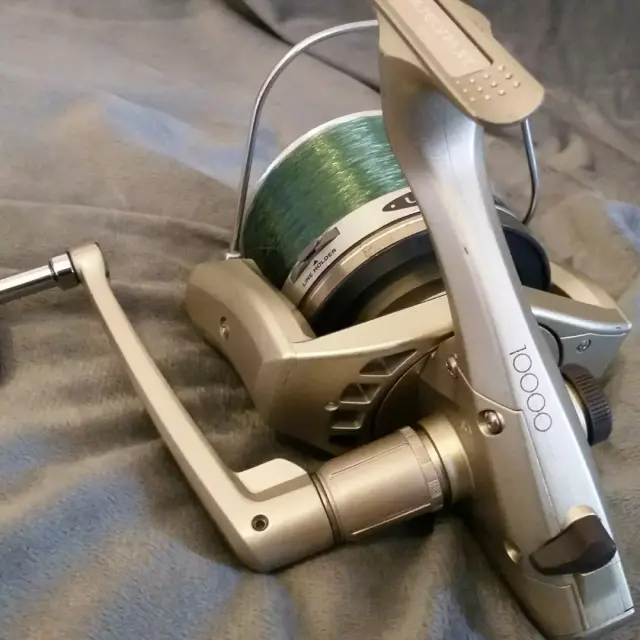
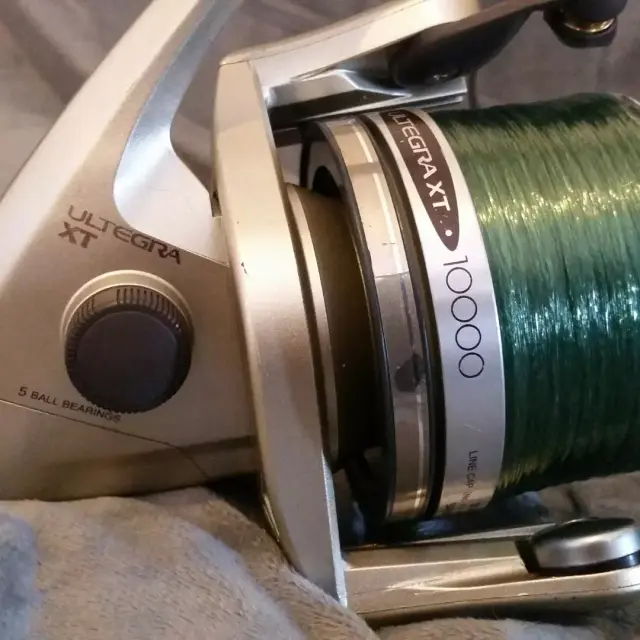

Quote: Too much grease and oil impede the spool and reduce casting distance.
Rubbish. The grease and oil are internal and will do nothing to reduce casting distance.
I use normal multi purpose bearing grease and 3 in 1 oil, no problems.
In reply to Post #6
Smart and very anal...
Smart and very anal...
In reply to Post #6
Unless, of course, the original quote was regarding multipliers.
Nice service👍
Unless, of course, the original quote was regarding multipliers.
Nice service👍
In reply to Post #8
Ah, yes. Didn't think of that
Ah, yes. Didn't think of that

Good old WD40 – it's basically a mineral Oil dissolved in a solvent, I used it yesterday on an Okuma Inc 6000 that after 3 years service the anti-reverse suddenly stopped engaging. Knew it would be dirt causing the problem – few blasts with WD40 and then working the lever/reel for a few minutes, blast out with an Air line, and then repeated. Working perfectly again now.
Any sign of doing it again it's a full strip down as Baitman does
But I only ever use Semi-Fluid grease in Reels, as unlike General Purpose or LM Type, semi-fluid constantly moves around, guaranteeing fresh lubricant is constantly being applied to the working parts while being used.
Any sign of doing it again it's a full strip down as Baitman does
But I only ever use Semi-Fluid grease in Reels, as unlike General Purpose or LM Type, semi-fluid constantly moves around, guaranteeing fresh lubricant is constantly being applied to the working parts while being used.

I had a chat with someone that is an expert in this sort of thing
and he told me the very worst thing Shimano did was add a service oil port to their reels !
he reckons it was because the gears in the reels were lasting too long !
as when you put oil in a reel it washes the grease off the gears causing excessive wear
and said you should only ever use grease
and he told me the very worst thing Shimano did was add a service oil port to their reels !
he reckons it was because the gears in the reels were lasting too long !
as when you put oil in a reel it washes the grease off the gears causing excessive wear
and said you should only ever use grease
In reply to Post #11
Really good imfo that is Gerry..I'm going to look at a email I got from a friend of mine who services and fully restores Cardinals and old Mitchell's, 440a,330 and so on..
Also Kieth is spot on...I'll find this grease or lubes name and report back ..!
Really good imfo that is Gerry..I'm going to look at a email I got from a friend of mine who services and fully restores Cardinals and old Mitchell's, 440a,330 and so on..
Also Kieth is spot on...I'll find this grease or lubes name and report back ..!
Yes...its called ,what my mate uses
ReelX
Yamalube...
(Prefers old skool brown grease on Mitchell's the egg shapers)...not modern reel though..
ReelX
Yamalube...
(Prefers old skool brown grease on Mitchell's the egg shapers)...not modern reel though..
In reply to Post #11
We all store our reels on the made up rods, in a holdall or quiver.
If the grease is a more fluid liquid type then it will mostly settle at the base of the reel cavity and won't then spread around and reach the top parts of the internals.
You'd have to have the reel a quarter filled with grease so that when in use there is a deep enough pool that the main gear can spread it around when you reel in.
We all store our reels on the made up rods, in a holdall or quiver.
If the grease is a more fluid liquid type then it will mostly settle at the base of the reel cavity and won't then spread around and reach the top parts of the internals.
You'd have to have the reel a quarter filled with grease so that when in use there is a deep enough pool that the main gear can spread it around when you reel in.
Exactly, and then when you put your Rods in a horizontal position it self levels again in the base of the Reel, guaranteeing all the moving parts are coved in fresh lubricant.
I just serviced a pair of the “Rolls Royce of Reels” the other week, a pair of Abu Suverans – both were full of Abu's semi-fluid grease still, consequently in perfect condition after decades of use (But they were made to Swiss Watch standards) If they were not so valuable I'd have been tempted to fit a micro Grease Nipple to the centre of the Oiling Plug in the rear and a bleed hole to the Rotor side. Would never needs stripping ever again, and would take a few seconds to totally replace the lubricant periodically.
I just serviced a pair of the “Rolls Royce of Reels” the other week, a pair of Abu Suverans – both were full of Abu's semi-fluid grease still, consequently in perfect condition after decades of use (But they were made to Swiss Watch standards) If they were not so valuable I'd have been tempted to fit a micro Grease Nipple to the centre of the Oiling Plug in the rear and a bleed hole to the Rotor side. Would never needs stripping ever again, and would take a few seconds to totally replace the lubricant periodically.
In reply to Post #13
My mate used to pack his mitchells with butter in an effort to slow down the churners. I'm not convinced it made much difference, but he was happy.
My mate used to pack his mitchells with butter in an effort to slow down the churners. I'm not convinced it made much difference, but he was happy.
In reply to Post #16
I can't believe it's not grease
We all used to pack our mitchell 300 reels with grease to prevent over runs.
Fished on the back wind, and a Gardner line clip taped to the rod above the bale arm. The dine would ping out and the rod would pull round as the reel started spinning.
Watch your fingers though...
I can't believe it's not grease
We all used to pack our mitchell 300 reels with grease to prevent over runs.
Fished on the back wind, and a Gardner line clip taped to the rod above the bale arm. The dine would ping out and the rod would pull round as the reel started spinning.
Watch your fingers though...
Buy some infinity's, had mine near on 20 years and never serviced either, grease or not, who knows, reels built how they should be, maintenance free

In reply to Post #17
Before they were nicked I had 300's packed out with LM car grease and fished churner style
Before they were nicked I had 300's packed out with LM car grease and fished churner style
In reply to Post #18
I'd have to agree a real man's reel.
I'd have to agree a real man's reel.
I cannot recall the last time I stripped a fixed spool reel down and greased it, probably my "300's" in the 70's and usually all I did was undo the screw to the rear and pump some more grease in.
My multipliers on the other hand get stripped down, oiled and greased with marine grade grease for boat trailers etc which is brilliant stuff to use on bearings and moving parts in wet conditions regularly but usually its a wash under the tap and a spray of WD40 or GT85 on the outside to help drive any moisture off the outside of the reel.
WD40 though, I will not allow it near anything rubber or silicone, it will destroy a thin silicone seal in seconds. I learnt that lesson when I gave an ATTX alarm a spray inside that had leaked water in, the silicone seal curled up and shriveled in front of my eyes and would not fit anymore and was totally ruined.
For fixed spool reels and bankstick threads and internal parts or anything else I handle etc, I give the outside moving parts an oiling with cooking oil especially handles so I do not taint my baits etc. Done that for years and its never done any harm, I always have a bottle in my food bag.
My multipliers on the other hand get stripped down, oiled and greased with marine grade grease for boat trailers etc which is brilliant stuff to use on bearings and moving parts in wet conditions regularly but usually its a wash under the tap and a spray of WD40 or GT85 on the outside to help drive any moisture off the outside of the reel.
WD40 though, I will not allow it near anything rubber or silicone, it will destroy a thin silicone seal in seconds. I learnt that lesson when I gave an ATTX alarm a spray inside that had leaked water in, the silicone seal curled up and shriveled in front of my eyes and would not fit anymore and was totally ruined.
For fixed spool reels and bankstick threads and internal parts or anything else I handle etc, I give the outside moving parts an oiling with cooking oil especially handles so I do not taint my baits etc. Done that for years and its never done any harm, I always have a bottle in my food bag.

In reply to Post #21
Rocket fuel liquid grease is very good.
a little seems to go a long way and the anti corrosion properties seems good, used it on my mag 525 multipliers for a while now.
Rocket fuel liquid grease is very good.
a little seems to go a long way and the anti corrosion properties seems good, used it on my mag 525 multipliers for a while now.
In reply to Post #20
AKA bullet proof. When reels were made for fishing purposes, not for looking at
AKA bullet proof. When reels were made for fishing purposes, not for looking at

In reply to Post #21
Remember reading an article in the Angling Times or mail. On things you should be doing in the close season that was in force for most of the country at the time. Was to service your reels by cleaning the old crease and dirt out with a toothbrush and packing them out with Swarfega. Why Swarfega and not axel crease or something simular I don't know? This was for me old Mitchell 300a mind which were basically two cogs and a drive shift. Wouldnt like to strip some of these more modern reels back. It seemed to work a treat though.
Remember reading an article in the Angling Times or mail. On things you should be doing in the close season that was in force for most of the country at the time. Was to service your reels by cleaning the old crease and dirt out with a toothbrush and packing them out with Swarfega. Why Swarfega and not axel crease or something simular I don't know? This was for me old Mitchell 300a mind which were basically two cogs and a drive shift. Wouldnt like to strip some of these more modern reels back. It seemed to work a treat though.

In reply to Post #24
For what its worth heres some findings from a lot of years servicing reels as part of my living. yamalube is a very decent gear grease as is the afformentioned Penn precision grease, yamalube is quite water resistant too which is a handy being as our beloved pass time is around the wet stuff. Avoid solid greases on wormshafts where possible, a semi liquid grease allows flow and transit, the trick is to find the correct viscosity so it doesnt simply run off. Absolutely avoid grease on a one way clutch bearing as this can cause slippage due to the roller pins not being able to move in and out of the housing properly, even oil can cause this to an extent, as for bearing races a liquid grease is perfect as it travels throughout the bearing adding lubrication and dissipating friction and heat properly. Avoid too much grease in general but particularly in the older daiwas as the antireverse pawl is quiet light in action so grease can stop it from working properly. If you are stripping sets of reels down try to keep the drive and pinion gears together as a "mating pair". Both the major manufacturers reels have they're own quirks, generally you will see a lot less dirt ingress in a shimano but most of their designs involve having to lift the rotor up first to access the body screws enabling you to take the side panel off and then removing the spindle and rotor whereas most daiwas have a back end window allowing you to access the spindle/oscillation screw and remove that first then work from there maybe because of this feature or perhaps just the general tolerancing most daiwas will allow more dirt and water ingress. Shimano use a much more radial cut to their gear patterns which whilst very tough it doesn't lend itself to being shimmed about particularly well whereas daiwas tend to use a slightly straighter cut patttern which is much easier to shim once worn but tends to be slightly noiser in use. Both manufacturers line guards on the whole are shocking with the exception of perhaps the more expensive models but the most common fault with the twin leg line guards is there is simply not a long enough channel for the legs to sit in, couple this with the flex and they jump straight out of the channels allowing them to twist and misalign with the rotor channels , keep these channels clean and ensure both sides still have their little rubbers on as when missing can cause more unwanted movement. Anyone still awake
For what its worth heres some findings from a lot of years servicing reels as part of my living. yamalube is a very decent gear grease as is the afformentioned Penn precision grease, yamalube is quite water resistant too which is a handy being as our beloved pass time is around the wet stuff. Avoid solid greases on wormshafts where possible, a semi liquid grease allows flow and transit, the trick is to find the correct viscosity so it doesnt simply run off. Absolutely avoid grease on a one way clutch bearing as this can cause slippage due to the roller pins not being able to move in and out of the housing properly, even oil can cause this to an extent, as for bearing races a liquid grease is perfect as it travels throughout the bearing adding lubrication and dissipating friction and heat properly. Avoid too much grease in general but particularly in the older daiwas as the antireverse pawl is quiet light in action so grease can stop it from working properly. If you are stripping sets of reels down try to keep the drive and pinion gears together as a "mating pair". Both the major manufacturers reels have they're own quirks, generally you will see a lot less dirt ingress in a shimano but most of their designs involve having to lift the rotor up first to access the body screws enabling you to take the side panel off and then removing the spindle and rotor whereas most daiwas have a back end window allowing you to access the spindle/oscillation screw and remove that first then work from there maybe because of this feature or perhaps just the general tolerancing most daiwas will allow more dirt and water ingress. Shimano use a much more radial cut to their gear patterns which whilst very tough it doesn't lend itself to being shimmed about particularly well whereas daiwas tend to use a slightly straighter cut patttern which is much easier to shim once worn but tends to be slightly noiser in use. Both manufacturers line guards on the whole are shocking with the exception of perhaps the more expensive models but the most common fault with the twin leg line guards is there is simply not a long enough channel for the legs to sit in, couple this with the flex and they jump straight out of the channels allowing them to twist and misalign with the rotor channels , keep these channels clean and ensure both sides still have their little rubbers on as when missing can cause more unwanted movement. Anyone still awake
In reply to Post #25
Those little 'rubber' feet that run in the guide channel for the line guard on shimano big pit types are very vulnerable to getting lost. I think they are a plastic rather than rubber as they slide up and down without any friction.
I have found a couple that were ready very loose and needed a pin full of superglue to lock back in place. On a few occasions I have found them split or missing and have had to fabricate replacement's using two thicknesses of very thin black heat shrink tube and a dab of superglue to secure them in place. This little diy fix has worked very well.
Those little 'rubber' feet that run in the guide channel for the line guard on shimano big pit types are very vulnerable to getting lost. I think they are a plastic rather than rubber as they slide up and down without any friction.
I have found a couple that were ready very loose and needed a pin full of superglue to lock back in place. On a few occasions I have found them split or missing and have had to fabricate replacement's using two thicknesses of very thin black heat shrink tube and a dab of superglue to secure them in place. This little diy fix has worked very well.
In reply to Post #26
Shinktubes the one mate
Shinktubes the one mate
One for the kids this one .....
Anyone still spraying their baits with the stuff?
Anyone still spraying their baits with the stuff?
In reply to Post #28
Wasn't it pike anglers use to spray their dead baits with it and I'm sure I read a story year and years ago about aftershave being used in ground bait to catch some big tench(anglers Mail I think it was )
Wasn't it pike anglers use to spray their dead baits with it and I'm sure I read a story year and years ago about aftershave being used in ground bait to catch some big tench(anglers Mail I think it was )

In reply to Post #29
Sea anglers used to do it on their lures, to keep them from rusting and there was a theory that it was an attractor.
Sea anglers used to do it on their lures, to keep them from rusting and there was a theory that it was an attractor.
Whale spit, I bought a bottle years ago after recommendation from a sea fisherman, brilliant stuff
In reply to Post #30
We used to spray pirks with it.
We used to spray pirks with it.
Reading ALL pages