


My alarms have started draining batteries, a set is lasting a couple of trips only. Alarms are Fox Mini Micron X, anyone else had this with these alarms or others?
Assume water ingress somehow creating a short circuit. Not sure if any value in trying to open them and dry out?
A month past the 2 year warranty but I will contact Fox anyway.
Assume water ingress somehow creating a short circuit. Not sure if any value in trying to open them and dry out?
A month past the 2 year warranty but I will contact Fox anyway.

In reply to Post #1
https://dalectronics.com/?srsltid=AfmBOoo0bJo86AIa5aPh9GAFdz352EoRLe_5iWvx0YANwZbLelw2xksj
Sorry can't do links Dal is worth contacting for some advice .
https://dalectronics.com/?srsltid=AfmBOoo0bJo86AIa5aPh9GAFdz352EoRLe_5iWvx0YANwZbLelw2xksj
Sorry can't do links Dal is worth contacting for some advice .

In reply to Post #1
I think they're plastic welded shut. Not sure if they can be taken apart without damaging?
I think they're plastic welded shut. Not sure if they can be taken apart without damaging?

In reply to Post #1
Yep I'd noticed it on one of my Fox Mini Micron Xs. Two of the others are OK but this one lasts a couple of trips before it begins to flash.
Yep I'd noticed it on one of my Fox Mini Micron Xs. Two of the others are OK but this one lasts a couple of trips before it begins to flash.

In reply to Post #4
Try swapping the battery from a flashing alarm to a non flashing alarm.
I have found the alarms don't kill the batteries 🤞🻠but odd "new" batteries are semi dud.
Another thing, I dont have the led on full, medium is enough, and also dont have volume up much.
Try swapping the battery from a flashing alarm to a non flashing alarm.
I have found the alarms don't kill the batteries 🤞🻠but odd "new" batteries are semi dud.
Another thing, I dont have the led on full, medium is enough, and also dont have volume up much.
In reply to Post #5
Thanks all, gone through 8 batteries in 2 months which is crazy!
Thanks all, gone through 8 batteries in 2 months which is crazy!
I had the same issue with a fox eos draining batteries when switched off..simple solution take the batteries out when you pack up . Might seem like an inconvenience but better than worrying if the batteries you've left in are going to last the night

On fox alarms the problem is often a failing on off switch so yes it makes sense to remove batteries after use.
In reply to Post #8
possibly worth a small spray with switch cleaning fluid.
possibly worth a small spray with switch cleaning fluid.
In reply to Post #9
Possibly worth plugging up the jack sockets with silicone too. They're on the back on mini micron x's and completely exposed. Can always pick it out with a pin in the future. Not a problem if you're using the illuminated bobbins though I guess?
Possibly worth plugging up the jack sockets with silicone too. They're on the back on mini micron x's and completely exposed. Can always pick it out with a pin in the future. Not a problem if you're using the illuminated bobbins though I guess?
In reply to Post #10
I have plugged the power out sockets on my micron x alarms.
I used a bit of silicone bobble hair band. It wouldn't quite fit in so I trimmed tiny slivers to make a small tapered section, put a tiny dot of nail varnish on it and managed to get about 5mm into the hole.
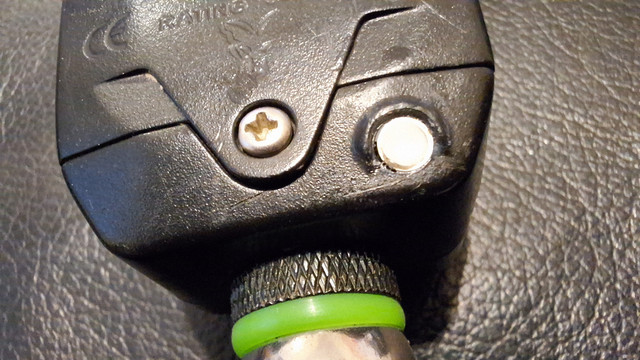

I have plugged the power out sockets on my micron x alarms.
I used a bit of silicone bobble hair band. It wouldn't quite fit in so I trimmed tiny slivers to make a small tapered section, put a tiny dot of nail varnish on it and managed to get about 5mm into the hole.
In reply to Post #11
It went so well I have also done barbel set

It went so well I have also done barbel set
In reply to Post #12
Why?
Why?
In reply to Post #13
One less place for moisture to get in, and i dont need the power out socket anyway.
One less place for moisture to get in, and i dont need the power out socket anyway.
Ultimately it all comes down to manufacturers trying to reach cost points to suit all pockets.
The top end alarms like delkims txds, fox rx + during manufacturing the PCBs will be conformally coated.
Conformal coating is a thin, protective poly layer that they apply to the PCB to protect the components from harsh environments, including moisture, dust, chemicals, and temperature extremes. It extends product lifespan by preventing corrosion, reducing whiskers, and increasing dielectric strength to prevent electrical arcing (shorting out)
The cheaper made alarms don't have this coating and typically are in a sealed assembly with a rubber gasket.
Over time as exposed to the elements that gasket will shrink allowing moisture in and to a degree same can be said of the plastic assembly.
So switch failure due to corrosion and shorts all ultimately due to moisture ingress are the challenges.
If you wanted to protect a cheaper alarm and can take it apart to expose the PCB nothing stopping you applying a bit of DIY.
For example
https://www.amazon.co.uk/Ambersil-30235-Clear-Acrylic-Protective/dp/B017WEOSQI/ref=asc_df_B017WEOSQI?mcid=27917c28397731a89bdad475207a7946&tag=googshopuk-21&linkCode=df0&hvadid=697215106018&hvpos=&hvnetw=g&hvrand=10861997083491341880&hvpone=&hvptwo=&hvqmt=&hvdev=c&hvdvcmdl=&hvlocint=&hvlocphy=1006517&hvtargid=pla-699940959745&psc=1&hvocijid=10861997083491341880-B017WEOSQI-&hvexpln=0&gad_source=1
The top end alarms like delkims txds, fox rx + during manufacturing the PCBs will be conformally coated.
Conformal coating is a thin, protective poly layer that they apply to the PCB to protect the components from harsh environments, including moisture, dust, chemicals, and temperature extremes. It extends product lifespan by preventing corrosion, reducing whiskers, and increasing dielectric strength to prevent electrical arcing (shorting out)
The cheaper made alarms don't have this coating and typically are in a sealed assembly with a rubber gasket.
Over time as exposed to the elements that gasket will shrink allowing moisture in and to a degree same can be said of the plastic assembly.
So switch failure due to corrosion and shorts all ultimately due to moisture ingress are the challenges.
If you wanted to protect a cheaper alarm and can take it apart to expose the PCB nothing stopping you applying a bit of DIY.
For example
https://www.amazon.co.uk/Ambersil-30235-Clear-Acrylic-Protective/dp/B017WEOSQI/ref=asc_df_B017WEOSQI?mcid=27917c28397731a89bdad475207a7946&tag=googshopuk-21&linkCode=df0&hvadid=697215106018&hvpos=&hvnetw=g&hvrand=10861997083491341880&hvpone=&hvptwo=&hvqmt=&hvdev=c&hvdvcmdl=&hvlocint=&hvlocphy=1006517&hvtargid=pla-699940959745&psc=1&hvocijid=10861997083491341880-B017WEOSQI-&hvexpln=0&gad_source=1