


I posted this on the hmbb group...
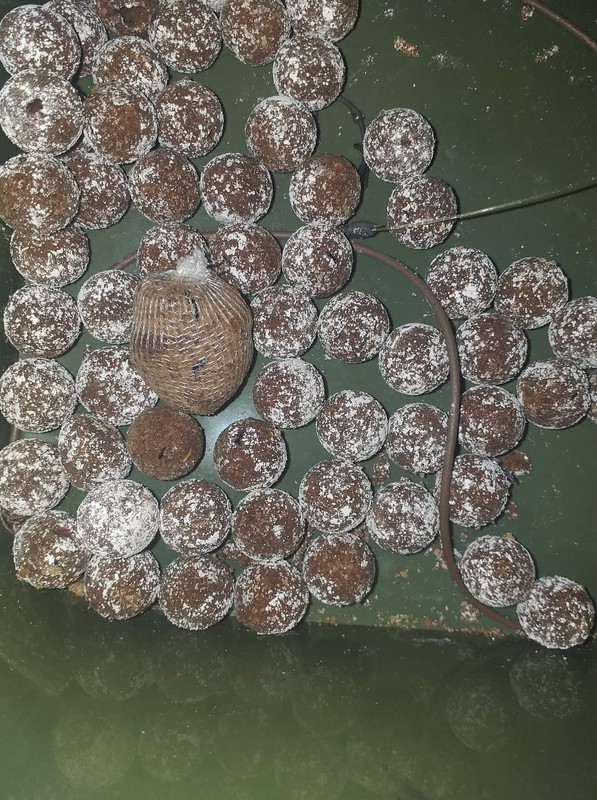
Mould or sugars...
I saw a post on the Bank Tackle page and had to comment.
Everyone telling this lad that the white dusting on his baits are sugars coming out of the baits, and i have heard similar on here and elsewhere many times.
Its mould, if you think its sugars them give it a lick and see.
This mould is like the stuff that forms on cheese, and isnt toxic like the blue/green or black moulds.
Its a natural part of the bacteria process and can actually improve the attraction and food signal from a bait. I have had some great multiple catches when my bait has been on the turn.
I have always said they too many lads are fishing with baits that are too fresh
Mould or sugars...
I saw a post on the Bank Tackle page and had to comment.
Everyone telling this lad that the white dusting on his baits are sugars coming out of the baits, and i have heard similar on here and elsewhere many times.
Its mould, if you think its sugars them give it a lick and see.
This mould is like the stuff that forms on cheese, and isnt toxic like the blue/green or black moulds.
Its a natural part of the bacteria process and can actually improve the attraction and food signal from a bait. I have had some great multiple catches when my bait has been on the turn.
I have always said they too many lads are fishing with baits that are too fresh
In reply to Post #19
I've found that my birdfood/liver/yeast bait turns pretty quickly, more so if I cover the baits in a light sugar solution straight from the freezer.. 48hrs seem the golden period if left somewhere warm.. These bait are without doubt to me much more effective.
I've found that my birdfood/liver/yeast bait turns pretty quickly, more so if I cover the baits in a light sugar solution straight from the freezer.. 48hrs seem the golden period if left somewhere warm.. These bait are without doubt to me much more effective.
In reply to Post #21
I aim for the beginning of little white spots with the surface of bait starting to become sticky with a slightly sweet sickly smell. When you get this stage it's very obvious imo and very effective
I aim for the beginning of little white spots with the surface of bait starting to become sticky with a slightly sweet sickly smell. When you get this stage it's very obvious imo and very effective

In reply to Post #13
I have watched carp that had been caught regularly on sweetcorn ignore it for days until it looked like a grey colour, horrible looking stuff. They then ate it.
I have always considered the white skin is the sugars, salts and enzymes coming to the surface of the bait, the name is efflorescence and is a natural process in foods and cements.
So many baits are definitely better when this white skin or stickiness appears, both shelf life and frozen.
Who was it mentioned the Tropical Mango, Honey Yucatan or Tutti Frutti?
When they got sticky, boy did they catch.
As for frozen, if the bait smells slightly rancid, like gone off excessively oily bacon, it does not seem to catch compared to the sickly sweet.
I have watched carp that had been caught regularly on sweetcorn ignore it for days until it looked like a grey colour, horrible looking stuff. They then ate it.
I have always considered the white skin is the sugars, salts and enzymes coming to the surface of the bait, the name is efflorescence and is a natural process in foods and cements.
So many baits are definitely better when this white skin or stickiness appears, both shelf life and frozen.
Who was it mentioned the Tropical Mango, Honey Yucatan or Tutti Frutti?
When they got sticky, boy did they catch.
As for frozen, if the bait smells slightly rancid, like gone off excessively oily bacon, it does not seem to catch compared to the sickly sweet.

In reply to Post #23
If my pre digested fish meal turned up with mould on I'd be livid 😂
If my pre digested fish meal turned up with mould on I'd be livid 😂

i wonder whats @TCarper spin on this? 

In reply to Post #25
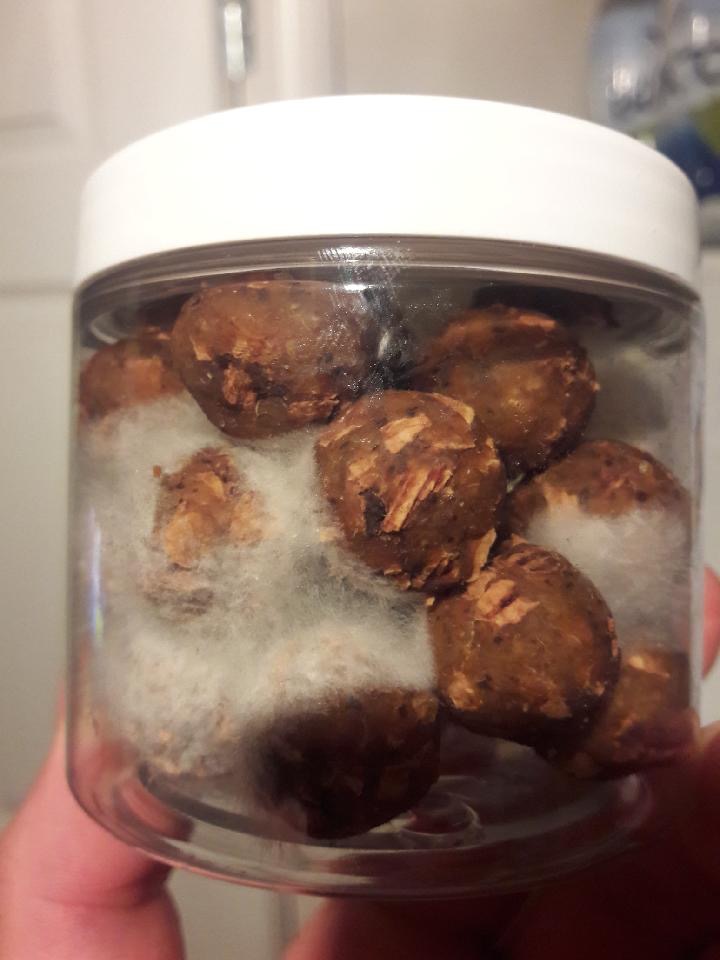
That is what happens to our hook baits very rapidly, when I leave the mild stabiliser out of the liquid cures. Our liquids are all constructed by me. I have to be very careful what I say, that's exactly why I have not posted anything on this thread. It is nothing to do with you lot, it is to do with the other people in the background, who will be reading what I write about this subject like a hawk. Business is business.
That reaction which you can see below... Is happening like a mini whirlwind, inside every hook bait we produce. There's a good reason why our company logo, has been a mini 'whirlwind' around the outside of a little round ball since we first started.
I have to stop that reaction below, just enough, for the hook baits to live inside a tub and to be user friendly.
That is what happens to our hook baits very rapidly, when I leave the mild stabiliser out of the liquid cures. Our liquids are all constructed by me. I have to be very careful what I say, that's exactly why I have not posted anything on this thread. It is nothing to do with you lot, it is to do with the other people in the background, who will be reading what I write about this subject like a hawk. Business is business.
That reaction which you can see below... Is happening like a mini whirlwind, inside every hook bait we produce. There's a good reason why our company logo, has been a mini 'whirlwind' around the outside of a little round ball since we first started.
I have to stop that reaction below, just enough, for the hook baits to live inside a tub and to be user friendly.
In reply to Post #26
Glad you stop the reaction😂
I've always read that moulds and sweeteners are taken
mistakenly , because the “chemicals “ for a better word are similar
to the “sugar” and structure in invertebrates
The use of yeasts also create reactions in bait
I used to use richworths back in the day, perhaps them going sticky was a plus
Considering the base mix used , which was probably poor
I hope we are past this now with bait
I believe fermented baits are an avenue worth exploring
But it isn't as simple as making the baits mouldy
Glad you stop the reaction😂
I've always read that moulds and sweeteners are taken
mistakenly , because the “chemicals “ for a better word are similar
to the “sugar” and structure in invertebrates
The use of yeasts also create reactions in bait
I used to use richworths back in the day, perhaps them going sticky was a plus
Considering the base mix used , which was probably poor
I hope we are past this now with bait
I believe fermented baits are an avenue worth exploring
But it isn't as simple as making the baits mouldy