


In reply to Post #15
dinner/lunch tea/dinner is an interesting one. It's taken decades and decades for me to finally say lunch followed by dinner (whatever happened to supper?) By there are somethings that I will never change. It will always be Christmas dinner never lunch and the kids were always given school dinner money
dinner/lunch tea/dinner is an interesting one. It's taken decades and decades for me to finally say lunch followed by dinner (whatever happened to supper?) By there are somethings that I will never change. It will always be Christmas dinner never lunch and the kids were always given school dinner money

In reply to Post #1
wot ********
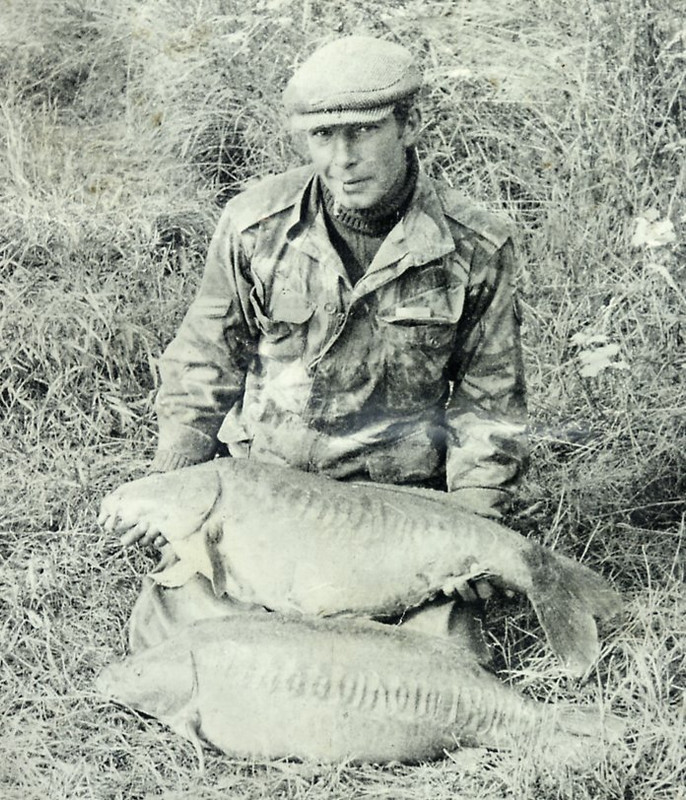
when I fished Longfield Ritchie Mcdonald used to come down after finishing his window cleaning round Pete Springate drove a hoover van Rod Hutchinson was a scruffy scaffolder Fred Wilton was a docker (he invented boilies) Len Arbury was an engineer all working class as were 90% I was a ****ing babe magnet
wot ********
when I fished Longfield Ritchie Mcdonald used to come down after finishing his window cleaning round Pete Springate drove a hoover van Rod Hutchinson was a scruffy scaffolder Fred Wilton was a docker (he invented boilies) Len Arbury was an engineer all working class as were 90% I was a ****ing babe magnet
In reply to Post #17
1) oldgeezer - I am aware of the backgrounds of people from that era. They represent an era where a community (however small) was starting to develop but there were people who came before them, and chapters in books about fishing for carp dating back well before the anglers you mention.
2) Fly fishing in the UK is now very mixed, which contrasts with its origins. From personal experience I've encountered labourers to lawyers and people from all over the world and from different ethnic groups. When I was carp fishing on Walthamstow I naturally assumed that they were mostly middle class - until I took up fly fishing and spent my first year on the trout ressies on the complex
1) oldgeezer - I am aware of the backgrounds of people from that era. They represent an era where a community (however small) was starting to develop but there were people who came before them, and chapters in books about fishing for carp dating back well before the anglers you mention.
2) Fly fishing in the UK is now very mixed, which contrasts with its origins. From personal experience I've encountered labourers to lawyers and people from all over the world and from different ethnic groups. When I was carp fishing on Walthamstow I naturally assumed that they were mostly middle class - until I took up fly fishing and spent my first year on the trout ressies on the complex
In reply to Post #18
You must of edited post #1 it reads differently today than it did yesterday.
You must of edited post #1 it reads differently today than it did yesterday.

In reply to Post #1
Very strange question to ask, all the ones I knew – were all from a working class background, they were certainly a much better class of people because of this I'd say.
There's were so few so few of them in my neck of the woods, to a degree they was looked upon by Match & Game Anglers as a bit “Odd” at the time.
Very strange question to ask, all the ones I knew – were all from a working class background, they were certainly a much better class of people because of this I'd say.
There's were so few so few of them in my neck of the woods, to a degree they was looked upon by Match & Game Anglers as a bit “Odd” at the time.
In reply to Post #18
Pre-gangsterfication of Britain most people dressed and spoke better, they'd appear more well to do.
A lot of working class folk probably couldn't write well enough for a book and there was obviously no vlogs, so their voices went unheard outside of their own circles
Pre-gangsterfication of Britain most people dressed and spoke better, they'd appear more well to do.
A lot of working class folk probably couldn't write well enough for a book and there was obviously no vlogs, so their voices went unheard outside of their own circles

In reply to Post #20
how do you defines class
is dan fairbrass upper class now hes a millionaire or is he still working class cos he still runs his company
how do you defines class
is dan fairbrass upper class now hes a millionaire or is he still working class cos he still runs his company

Jim Shelley is an upper middle class angler.
It's not just how much money you have it's how you behave and in an angling contex your sporting ethos.
Jim is the epitome of a well mannered, gentle, thoughtful angler who puts others before himself. He has become someone of note due to his well mannered deferential style.
I say, One should Keep it Real Chaps.
It's not just how much money you have it's how you behave and in an angling contex your sporting ethos.
Jim is the epitome of a well mannered, gentle, thoughtful angler who puts others before himself. He has become someone of note due to his well mannered deferential style.
I say, One should Keep it Real Chaps.

In reply to Post #23

In reply to Post #22
40-50 years ago we had manufacturing and an industrial base, a totally different landscape, it self defined itself.
40-50 years ago we had manufacturing and an industrial base, a totally different landscape, it self defined itself.
In reply to Post #19
The post hasn't been edited Sir.
I am interested in the very beginnings of carp so I feel that it's a valid question (to those who think it's a strange question).
And I did acknowledge at the beginning that class is not as easily defined now.
However it would have been back in the first part of the 1900s when very small numbers of people dabbled in carp.
The post war era saw a boom in angling as workers had more free time, manufacturing techniques made gear more accessible and things that were once out of reach for working class people were now available to all.
Jim Shelley, haha, well he's built like Henry VIII.
The post hasn't been edited Sir.
I am interested in the very beginnings of carp so I feel that it's a valid question (to those who think it's a strange question).
And I did acknowledge at the beginning that class is not as easily defined now.
However it would have been back in the first part of the 1900s when very small numbers of people dabbled in carp.
The post war era saw a boom in angling as workers had more free time, manufacturing techniques made gear more accessible and things that were once out of reach for working class people were now available to all.
Jim Shelley, haha, well he's built like Henry VIII.

In reply to Post #26
I would imagine that early carp anglers were among the more well off in society, and at that time people with money would have been more likely to be in what could be called the middle or upper classes. They would have needed free time and transport to get to waters containing carp that were more commonly found on country estates than in urban areas, where canals were popular for match fishing.
The post war rebuild and the development of infrastructure in and around London lead to gravel pits popping up (popping down?) all over the place, which greatly expanded the accessibility of waters that contained carp to 'normal people', thanks to some great stocking activities.
I grew up in the 70s, when carp anglers weren't necessarily posh, but they were a bit 'odd', and there weren't many of them.
I would imagine that early carp anglers were among the more well off in society, and at that time people with money would have been more likely to be in what could be called the middle or upper classes. They would have needed free time and transport to get to waters containing carp that were more commonly found on country estates than in urban areas, where canals were popular for match fishing.
The post war rebuild and the development of infrastructure in and around London lead to gravel pits popping up (popping down?) all over the place, which greatly expanded the accessibility of waters that contained carp to 'normal people', thanks to some great stocking activities.
I grew up in the 70s, when carp anglers weren't necessarily posh, but they were a bit 'odd', and there weren't many of them.
Starting my independent angling in 1960 in SW Lancashire I would say the vast majority of anglers were working class in the traditional sense. Happily coarse angling was a very open pastime that required people to work together and share. The canals, lakes, flashes, clay pits, and industrial reservoirs of my area were run by clubs. Warrington and Lymn Anglers had a large number of waters between them and membership was cheap and within reach of everyone's pocket. The waters were cheap to rent as many of them were redundant and unused. Clubs would manage them and provide fishing for members. Certainly where I lived carp fishing was done by a tiny minority of club members fishing for a small number fish.
Nobody would have believed that a 5 acre pit could bring in a gross income of 20 grand and more, that people would have to pay £25 a day for coarse fishing. We have done it to ourselves with greed and selfishness with carp and match fisherman leading the charge. Class has got nothing to do with this, individual greed is the problem as it always is.
Nobody would have believed that a 5 acre pit could bring in a gross income of 20 grand and more, that people would have to pay £25 a day for coarse fishing. We have done it to ourselves with greed and selfishness with carp and match fisherman leading the charge. Class has got nothing to do with this, individual greed is the problem as it always is.
Not so much about class but I found this interesting
A brief history of UK carping
A brief history of UK carping
In reply to Post #29
Reading it now, very informative!
Reading it now, very informative!