


I cannot remember the stuff you buy o stop sharpened hooks going rusty

In reply to Post #1
Silica dessicant sachets?
Silica dessicant sachets?

In reply to Post #1
i use a sharpie or a drop of Vaseline, does the job.
i use a sharpie or a drop of Vaseline, does the job.

In reply to Post #1
Marker Pens. Rubbish, but will protect for a few hours.
JAG Pens. Slightly less rubbish. Should last a night.
Silicone/Petroleum Jelly (Mucilin, Vaseline, Lypsyl etc) - similar to the JAG pens, just short of rubbish.
Beeswax. Decent, but sticky, which will not aid hook penetration. Easily a good 24 h+ protection, probably more.
Candle wax. Very decent. A few strokes followed by the lick of a lighter. 24 hrs+ easy, probably more.
Specialist Sharpened Hooks Anti Rust Compound. Excellent. The best I've used. Again - a few strokes followed by the lick of a lighter. 48 hrs protection.
Crayons. Never used them but the SSH compound is very, very similar so I assume they'll work well.
The oil from the side of your nose (lol). Shelley popped this one up on YouTube a while back. I'm not sure if it was a wind-up or what, but I have actually seen others quoting this as a useful method. It is not. Don't bother.
I have recently tried that Korda Kamakote stuff which is much better than I expected it to be. I thought it was just vaseline but it's not, it has a dewatering property (a bit like wd40) which works flawlessly over 24 hrs.
Marker Pens. Rubbish, but will protect for a few hours.
JAG Pens. Slightly less rubbish. Should last a night.
Silicone/Petroleum Jelly (Mucilin, Vaseline, Lypsyl etc) - similar to the JAG pens, just short of rubbish.
Beeswax. Decent, but sticky, which will not aid hook penetration. Easily a good 24 h+ protection, probably more.
Candle wax. Very decent. A few strokes followed by the lick of a lighter. 24 hrs+ easy, probably more.
Specialist Sharpened Hooks Anti Rust Compound. Excellent. The best I've used. Again - a few strokes followed by the lick of a lighter. 48 hrs protection.
Crayons. Never used them but the SSH compound is very, very similar so I assume they'll work well.
The oil from the side of your nose (lol). Shelley popped this one up on YouTube a while back. I'm not sure if it was a wind-up or what, but I have actually seen others quoting this as a useful method. It is not. Don't bother.
I have recently tried that Korda Kamakote stuff which is much better than I expected it to be. I thought it was just vaseline but it's not, it has a dewatering property (a bit like wd40) which works flawlessly over 24 hrs.

In reply to Post #4
Would WD40 work? I know sea anglers recon it is also an attractant and spray it on their lures??
Michael
Would WD40 work? I know sea anglers recon it is also an attractant and spray it on their lures??
Michael
In reply to Post #5
Possibly mate.
I'll let you try it

Possibly mate.
I'll let you try it
This is a genuine quest for knowledge. I nearly always start a session with new hooks straight out of the packet. Usual checks, ie skin and nail for sharpness. Check hooks each time they come in and replace if necessary(mostly not). I rarely leave hook out for more than 12 hours and never more than 24. Just the way I fish. I have never seen or been troubled by rust. How closely are you all checking or is it only hand sharpened hooks that are a problem.
In reply to Post #7
It's only sharpened hooks mate. Standard off-the-shelf-hooks are plated/coated to prevent rust. Sharpening removes that treatment/coating so you need to apply other methods to protect them.
It's only sharpened hooks mate. Standard off-the-shelf-hooks are plated/coated to prevent rust. Sharpening removes that treatment/coating so you need to apply other methods to protect them.

In reply to Post #4
I wouldn't mind betting that Korda Kamakote is something fairly easily obtainable. I've not seen or used it but maybe it's something like silicon grease or something?
I can't see Korda being able to develop something and then get it manufactured in the quantities they need to make it cost effective.
As you say the SSH stuff is very likely to be kids crayons for the same reasons.
I wouldn't mind betting that Korda Kamakote is something fairly easily obtainable. I've not seen or used it but maybe it's something like silicon grease or something?
I can't see Korda being able to develop something and then get it manufactured in the quantities they need to make it cost effective.
As you say the SSH stuff is very likely to be kids crayons for the same reasons.
In reply to Post #9
Oh I totally agree mate. But whatever it is it does work better than I expected it would.
Oh I totally agree mate. But whatever it is it does work better than I expected it would.
In reply to Post #8
Thanks mate, I'll carry on doing what I'm doing. Simples.
Thanks mate, I'll carry on doing what I'm doing. Simples.
In reply to Post #6
I think I will, what have I got to lose I'm blanking consistently already

Michael
I think I will, what have I got to lose I'm blanking consistently already
Michael
In reply to Post #12

In reply to Post #9
Tallow
Tallow
In reply to Post #14
It looks and behaves nothing like tallow imo.
It looks and behaves nothing like tallow imo.

In reply to Post #1
I am bringing out a product that will be a game changer in the next few months..
I am bringing out a product that will be a game changer in the next few months..

In reply to Post #16
I use a wax like crayon I can't remember where I bought them
They are sold for hooks, probably the same as below
But I read everywhere that you stroke the hook then apply heat
I heat the hook and give it a gentle wipe and it's far more effective
I use a wax like crayon I can't remember where I bought them
They are sold for hooks, probably the same as below
But I read everywhere that you stroke the hook then apply heat
I heat the hook and give it a gentle wipe and it's far more effective
In reply to Post #15
Sorry a bit of a generalised term that, It's very similar to the stuff I've seen used in the food industry, food grade grease, we just call it tallow, historical term I guess as it's what would have been used in the past
Sorry a bit of a generalised term that, It's very similar to the stuff I've seen used in the food industry, food grade grease, we just call it tallow, historical term I guess as it's what would have been used in the past
In reply to Post #18
Whatever it is it probably cost peanuts and they sell it for pounds
Be good to know if it is that food grease stuff though
Whatever it is it probably cost peanuts and they sell it for pounds
Be good to know if it is that food grease stuff though
In reply to Post #19
It will be, clear, Vaseline type stuff but edible at a push😉 Pound tins are about a fiver!!
As an aside I've been messing about with heat, bluing the point and then quenching in a little oil, olive btw. It does seem to deter rust forming and also acts to re case harden the points. Once done you struggle to touch it with a standard file, whether the point becomes too brittle I've not found it to so far. Also a polished finish rather than just a filed one will be less susceptible to rust, less surface area etc.
It will be, clear, Vaseline type stuff but edible at a push😉 Pound tins are about a fiver!!
As an aside I've been messing about with heat, bluing the point and then quenching in a little oil, olive btw. It does seem to deter rust forming and also acts to re case harden the points. Once done you struggle to touch it with a standard file, whether the point becomes too brittle I've not found it to so far. Also a polished finish rather than just a filed one will be less susceptible to rust, less surface area etc.

Probably butchers grease the stuff they use on their electric meat slicers saws etc edible tasteless !!
In reply to Post #20
I've been messing about with heat, bluing the point and then quenching in a little oil, olive btw. It does seem to deter rust forming and also acts to re case harden the points.
Mate, imo you're crazy for doing that.
Hooks are not case hardened, they are through-hardened, so it's not possible to re case harden them. Besides, case hardening is for low carbon steels (not the high carbon spring steel that hooks are made from). Case hardening takes place in a controlled atmosphere (like all modern heat treatments), you'd have no hope doing it with any consistency at home.
Modern hooks are through-hardened with either a harden/temper or austemper process (unless you're ESP who use some crazy cryogenic temper process). During those processes martensite is formed during the oil quench for harden/temper or salt bath for austemper. Once finished the hardness is right in the sweet spot for spring steel. It cannot be improved.
So basically what you're doing is pointless (no pun intended lol). The absolute best you can hope for is to have a hook with the exact same properties it had before you touched it. But given you have next to no control over the atmosphere and temps it is highly likely you'll either increase hardness (ruining the critical spring characteristics of the hook i.e. making it brittle), or reducing hardness which can lead to a reduced spring rate and bending of the hook.
If you think you're seeing less rust it'll likely be because you've decarburized the steel due to heating in an open atmosphere. Not good.
What you're doing to those hooks is basically the equivalent of taking your line and rubbing it back and forth on a variety of abrasive surfaces before casting out to see what happens. It's an accident waiting to happen. I would strongly recommend you don't bother buddy.
I've been messing about with heat, bluing the point and then quenching in a little oil, olive btw. It does seem to deter rust forming and also acts to re case harden the points.
Mate, imo you're crazy for doing that.
Hooks are not case hardened, they are through-hardened, so it's not possible to re case harden them. Besides, case hardening is for low carbon steels (not the high carbon spring steel that hooks are made from). Case hardening takes place in a controlled atmosphere (like all modern heat treatments), you'd have no hope doing it with any consistency at home.
Modern hooks are through-hardened with either a harden/temper or austemper process (unless you're ESP who use some crazy cryogenic temper process). During those processes martensite is formed during the oil quench for harden/temper or salt bath for austemper. Once finished the hardness is right in the sweet spot for spring steel. It cannot be improved.
So basically what you're doing is pointless (no pun intended lol). The absolute best you can hope for is to have a hook with the exact same properties it had before you touched it. But given you have next to no control over the atmosphere and temps it is highly likely you'll either increase hardness (ruining the critical spring characteristics of the hook i.e. making it brittle), or reducing hardness which can lead to a reduced spring rate and bending of the hook.
If you think you're seeing less rust it'll likely be because you've decarburized the steel due to heating in an open atmosphere. Not good.
What you're doing to those hooks is basically the equivalent of taking your line and rubbing it back and forth on a variety of abrasive surfaces before casting out to see what happens. It's an accident waiting to happen. I would strongly recommend you don't bother buddy.
In reply to Post #22
Mate I've worked for a company for over twenty five years who specialised in all forms of heat treatment and surface finishing .. Untreated hooks will be made from low to medium carbon content steels, the hooks are case hardened in a sealed, endothermic atmosphere, quench furnace, at a temperature of around 830 deg°C ( this will take minutes to perform) then quenched in oil and then tempered back to 175 deg°C and c ooled to room temp.
If hooks were through hard ended as you state they would be brittle, snap in your hands and they're would be no way of filing them to a point after heat treatment. Try filing a file and you'll see what I mean
The reason ESP use a cryogenic process is to actual change the steels properties as you stated .
I'm only applying heat to the very tip and as it's only getting to very light straw so around 170 deg° So basically tempering back to the materials original state. The method is similar to someone seasoning a cast iron pan, heat then oil....no rust
Mate I've worked for a company for over twenty five years who specialised in all forms of heat treatment and surface finishing .. Untreated hooks will be made from low to medium carbon content steels, the hooks are case hardened in a sealed, endothermic atmosphere, quench furnace, at a temperature of around 830 deg°C ( this will take minutes to perform) then quenched in oil and then tempered back to 175 deg°C and c ooled to room temp.
If hooks were through hard ended as you state they would be brittle, snap in your hands and they're would be no way of filing them to a point after heat treatment. Try filing a file and you'll see what I mean
The reason ESP use a cryogenic process is to actual change the steels properties as you stated .
I'm only applying heat to the very tip and as it's only getting to very light straw so around 170 deg° So basically tempering back to the materials original state. The method is similar to someone seasoning a cast iron pan, heat then oil....no rust

In reply to Post #23
The cryogenic process isn't anything new. It's often used to increase hardness and strength in steels that still have austenite at room temp. The steel will be dropped into liquid nitrogen at -185c this will convert the austenite to martensite.
Most hooks will undergo a quench and temper to keep a ductility and strength in the steel. By heating the point you will effectively be normalising it back to its non treated state. Although this will potentially help the rust issue, you might have issues with the point being soft and turning over.
The cryogenic process isn't anything new. It's often used to increase hardness and strength in steels that still have austenite at room temp. The steel will be dropped into liquid nitrogen at -185c this will convert the austenite to martensite.
Most hooks will undergo a quench and temper to keep a ductility and strength in the steel. By heating the point you will effectively be normalising it back to its non treated state. Although this will potentially help the rust issue, you might have issues with the point being soft and turning over.
In reply to Post #24
I agree with re cryogenics restructuring of the steel but to normalise the steel you'd need to heat it to the temperature it was heat treated to.
All I'd say is try it. File a hook down to the desired sharpness, use a flameless lighter to heat up to the barb, moving back and forth and once the colour turns straw quench it in oil. If you don't find it works or causes problems, fine.
I agree with re cryogenics restructuring of the steel but to normalise the steel you'd need to heat it to the temperature it was heat treated to.
All I'd say is try it. File a hook down to the desired sharpness, use a flameless lighter to heat up to the barb, moving back and forth and once the colour turns straw quench it in oil. If you don't find it works or causes problems, fine.
In reply to Post #23
I work in metal forming and heat treatment (the process used to manufacture hooks) and I'm going to tell you that you are wrong buddy.
Case hardening hardens the surface (obviously), it is for metals that need to resist abrasion. It leaves a soft, ductile core which is exactly what you don't want for hooks. They WILL bend.
Through-hardening, when done through harden/temper or austemper, can result in whatever hardness is required depending on atmosphere, temps, furnace passing times, etc - but you will know that with your experience.
Hooks are treated to the HV 500/600 range at the core (I know this for a fact because I've tested most brands in my lab at work) where embrittlement doesn't occur until you reach somewhere around the 800 mark.
Case hardening of low/mid carbon steels would result in a core hardness of ~ 150/200 max (which in steel terms is soft as ****).
I know why ESP use the cryogenic process, and if you check you'll see that this process is not used for low/med carbon steels (it's for high carbon and tool steel primarily).
A hook is essentially a spring, you need the higher carbon content to achieve this, and you need 500/600 at the core to provide the spring characteristics that are absolutely key to how a hook absorbs loading of force.
Files are made from tool steel and treated right up to ~HV 1000 so your example has absolutely no relevance to this convo whatsoever dude. Not sure what relevance cast iron has to formed steel either.
But hey, if you think you're doing yourself a favour messing with those hooks, fill your boots buddy
I work in metal forming and heat treatment (the process used to manufacture hooks) and I'm going to tell you that you are wrong buddy.
Case hardening hardens the surface (obviously), it is for metals that need to resist abrasion. It leaves a soft, ductile core which is exactly what you don't want for hooks. They WILL bend.
Through-hardening, when done through harden/temper or austemper, can result in whatever hardness is required depending on atmosphere, temps, furnace passing times, etc - but you will know that with your experience.
Hooks are treated to the HV 500/600 range at the core (I know this for a fact because I've tested most brands in my lab at work) where embrittlement doesn't occur until you reach somewhere around the 800 mark.
Case hardening of low/mid carbon steels would result in a core hardness of ~ 150/200 max (which in steel terms is soft as ****).
I know why ESP use the cryogenic process, and if you check you'll see that this process is not used for low/med carbon steels (it's for high carbon and tool steel primarily).
A hook is essentially a spring, you need the higher carbon content to achieve this, and you need 500/600 at the core to provide the spring characteristics that are absolutely key to how a hook absorbs loading of force.
Files are made from tool steel and treated right up to ~HV 1000 so your example has absolutely no relevance to this convo whatsoever dude. Not sure what relevance cast iron has to formed steel either.
But hey, if you think you're doing yourself a favour messing with those hooks, fill your boots buddy
In reply to Post #26
essentially if he's only heating the hook to a straw colour and quenching he's only ruining the existing temper isn't he? not heat treating?
when I made long sharp pointed objects (don't know how the rule stand on this sort of discussion) when hardening 01/D2 tool steel a cherry red was achieved in a forge then a quench in hot oil, a quick clean up on a belt grinder then a long temper in an oven and the material was then a straw colour
all that's happening heating that hook up is your ruining the temper further up the shank and de carbing the steel as yonny said. the fact you're quenching in oil will be the reason you're not getting rust, not the heating up.
just my 2Ps worth.
essentially if he's only heating the hook to a straw colour and quenching he's only ruining the existing temper isn't he? not heat treating?
when I made long sharp pointed objects (don't know how the rule stand on this sort of discussion) when hardening 01/D2 tool steel a cherry red was achieved in a forge then a quench in hot oil, a quick clean up on a belt grinder then a long temper in an oven and the material was then a straw colour
all that's happening heating that hook up is your ruining the temper further up the shank and de carbing the steel as yonny said. the fact you're quenching in oil will be the reason you're not getting rust, not the heating up.
just my 2Ps worth.
In reply to Post #27
That's the thing, you are basically baking the oil to the hook, similar to baking trays etc. The heat applies is so minimal I can hold the hook in my fingers whilst it's being applied.. it's more of a tarnishing process, it works for me, the whys and the wherefores can be debated to kingdom come, try it or don't, it's just an idea
That's the thing, you are basically baking the oil to the hook, similar to baking trays etc. The heat applies is so minimal I can hold the hook in my fingers whilst it's being applied.. it's more of a tarnishing process, it works for me, the whys and the wherefores can be debated to kingdom come, try it or don't, it's just an idea
In reply to Post #28
horses for courses buddy.
if it works for you then I'm not going to tell you any different.
just like people who hate the fact my bobbins weight 40grams and are tied to my buzz bars with paracord some people shudder when they see it.
horses for courses buddy.
if it works for you then I'm not going to tell you any different.
just like people who hate the fact my bobbins weight 40grams and are tied to my buzz bars with paracord
some people shudder when they see it.
In reply to Post #27
It depends on what process was used (harden/temper vs. austemper) but yes buddy, he'll be ruining the temper. The point is that it is not possible to improve the characteristics of the treated steel, it's already exactly where it needs to be.
It depends on what process was used (harden/temper vs. austemper) but yes buddy, he'll be ruining the temper. The point is that it is not possible to improve the characteristics of the treated steel, it's already exactly where it needs to be.
In reply to Post #30
I didn't think I was far off.
brings back memories of a competition chopping ''tool'' that I didn't temper correctly.
one swing against some 2x4 wood and it shattered like glass.
steel is a crazy thing isn't it? treat it in a certain way at its as brittle as ceramic.
treat it another way and it can be bent in half only to spring back to a perfect straightness.
I didn't think I was far off.
brings back memories of a competition chopping ''tool'' that I didn't temper correctly.
one swing against some 2x4 wood and it shattered like glass.
steel is a crazy thing isn't it? treat it in a certain way at its as brittle as ceramic.
treat it another way and it can be bent in half only to spring back to a perfect straightness.
In reply to Post #29
I used to have some homemade stainless bobbins in the 90's weighed in at 2 1/2 oz, used them in all situations never struggled registering drop backs 😉
I used to have some homemade stainless bobbins in the 90's weighed in at 2 1/2 oz, used them in all situations never struggled registering drop backs 😉
In reply to Post #32
I hear them hit the floor before the alarm goes off
I hear them hit the floor before the alarm goes off
In reply to Post #33
😂😂
😂😂
In reply to Post #5
I thought WD-40 was a fish oil.
I thought WD-40 was a fish oil.
In reply to Post #35
That's a myth buddy.
That's a myth buddy.

After sharpening my hooks I use a brush pen to give them a light smear of castor oil.
It has no taste residue, stays on the hook points and totally prevents tarnish and rust.
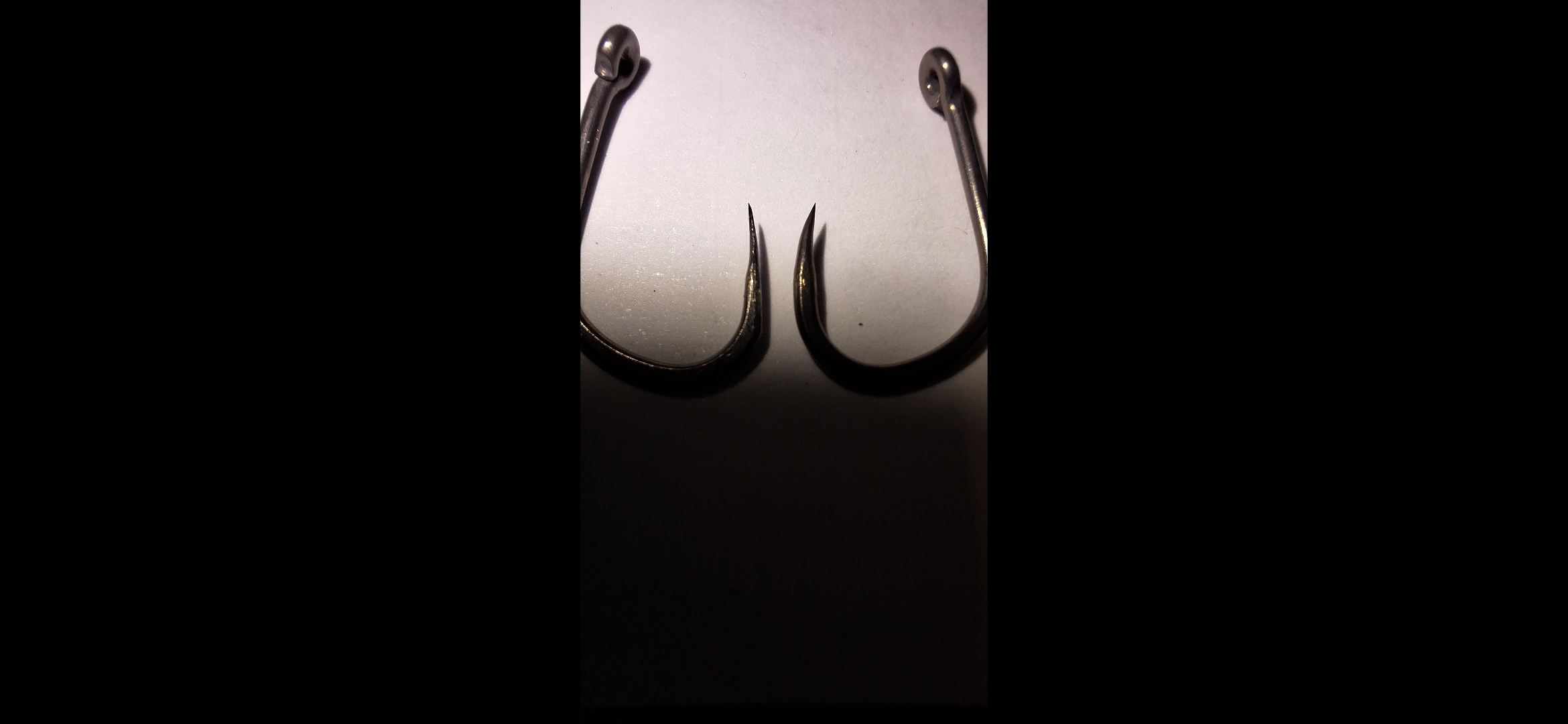
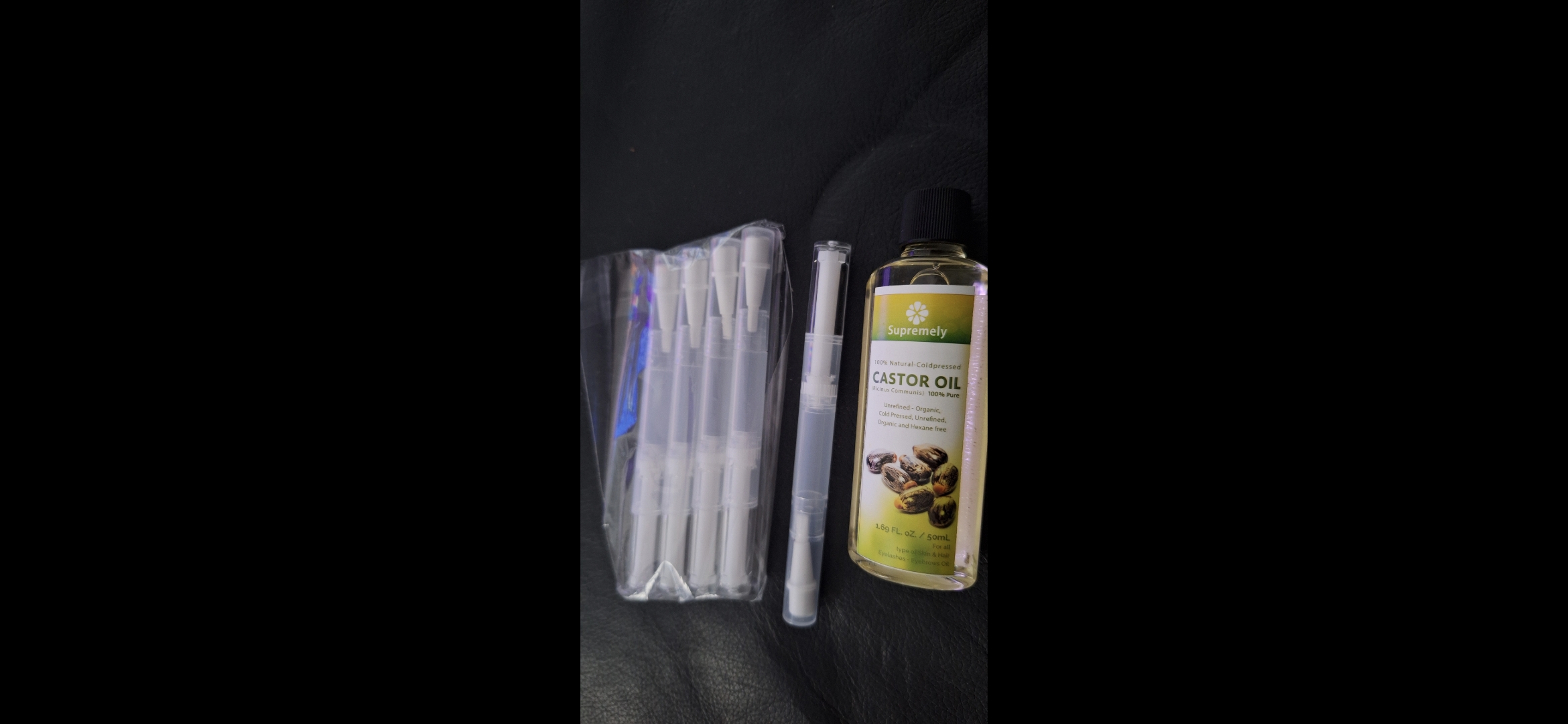
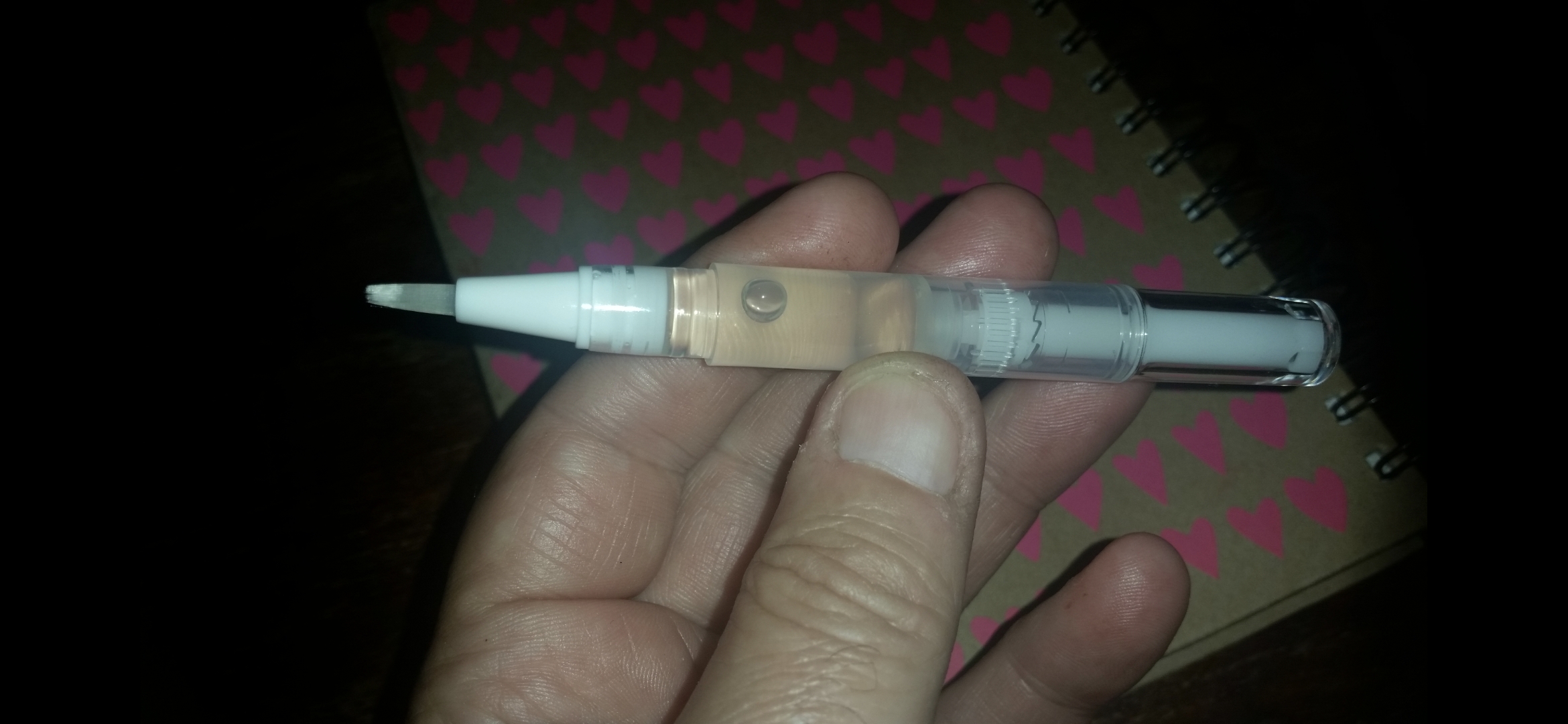
It has no taste residue, stays on the hook points and totally prevents tarnish and rust.
Interesting, I personally don't like treatments with lots of smell like the ZR liquid but struggle to keep a hook rust free otherwise. Does the Castor oil measure up to these types of applications?
In reply to Post #38
Honestly, it is perfect. No bad taste, stays on the hook point really well.
Castor oil is much more viscous than other oils.
I can catch a few fish over a 48hr sesh on the same hooks with absolutely no signs of rust of that micro corrosion that starts to make a point feel dull and scratchy.
The brush pens (ebay) are so easy to fill and use.
All thoroughly tested by me, so you know its the bollox 😎
Honestly, it is perfect. No bad taste, stays on the hook point really well.
Castor oil is much more viscous than other oils.
I can catch a few fish over a 48hr sesh on the same hooks with absolutely no signs of rust of that micro corrosion that starts to make a point feel dull and scratchy.
The brush pens (ebay) are so easy to fill and use.
All thoroughly tested by me, so you know its the bollox 😎
Thanks, will give it a shot 👍
Might be a stupid question as I have no idea about the manufacturing of hooks, the processes involved or the materials...i just use the things.. but isn't there anther material that can be used that stays sharper for longer and that wasn't so susceptible to rusting?
Pardon my stupidity 😎
Pardon my stupidity 😎

In reply to Post #39
I wonder if thats what is in the pen brushes that JP hooks supply?
I wonder if thats what is in the pen brushes that JP hooks supply?
In reply to Post #39
I'll give this a go and report back, how did you come up with the idea of castor oil of all things ?
I'll give this a go and report back, how did you come up with the idea of castor oil of all things ?
In reply to Post #43
I'd seen what others used and tried various things for myself (lip balm, vaseline, wax crayon, marker pen, etc) but nothing seemed reliable and easily available without the carp tax.
While at a mates he showed me a pen brush he got from one of the sharp hook suppliers. I wiped it on my fingers and it was clearly an oil of some type, but a bit thin and it didn't taste too good. He said he was still reeling in to find corroded hook points in the morning, so not ideal.
This set me off on a mission...
While having a cuppa at another mates and discussing the issue i noticed a small bottle of oil on their table. His Mrs uses various stuff for aromatherapy and other wierd things so I started looking through her oil collection.
Most were very thin as used as carriers for essential oils. Being into bait I also tasted each one, some were yukky.
I asked if she had anything thicker, more viscous.
Out came the castor oil, it passed the taste test and I filled up my pen brush and went away to test it.
At the time my hook sharpening wasn't up to much but as I got better I then needed to prevent oxidation on the ones I'd done and put into a little hook box.
I have never had a hook go rusty in the box, and even if I've been fishing and caught a few they still keep their points and don't show any signs of corrosion even if i have had the same hooks on for a few days.
Search; Twist brush pen.
I'd seen what others used and tried various things for myself (lip balm, vaseline, wax crayon, marker pen, etc) but nothing seemed reliable and easily available without the carp tax.
While at a mates he showed me a pen brush he got from one of the sharp hook suppliers. I wiped it on my fingers and it was clearly an oil of some type, but a bit thin and it didn't taste too good. He said he was still reeling in to find corroded hook points in the morning, so not ideal.
This set me off on a mission...
While having a cuppa at another mates and discussing the issue i noticed a small bottle of oil on their table. His Mrs uses various stuff for aromatherapy and other wierd things so I started looking through her oil collection.
Most were very thin as used as carriers for essential oils. Being into bait I also tasted each one, some were yukky.
I asked if she had anything thicker, more viscous.
Out came the castor oil, it passed the taste test and I filled up my pen brush and went away to test it.
At the time my hook sharpening wasn't up to much but as I got better I then needed to prevent oxidation on the ones I'd done and put into a little hook box.
I have never had a hook go rusty in the box, and even if I've been fishing and caught a few they still keep their points and don't show any signs of corrosion even if i have had the same hooks on for a few days.
Search; Twist brush pen.

In reply to Post #44
Good info thanks, off to buy the brushes now and some caster oil next time I leave 'CarpForum Towers' ...
Good info thanks, off to buy the brushes now and some caster oil next time I leave 'CarpForum Towers' ...

In reply to Post #37
What brand is that brush pen please Dave? There are loads on Amazon but many don't look as good as the one in your picture.
What brand is that brush pen please Dave? There are loads on Amazon but many don't look as good as the one in your picture.
In reply to Post #46
Dave sent me this link last night, so credit to him for this info:
"The oil brush pens - mine are not refillable.
The refill ones you squeeze them, so not sure on controlling the flow.
My ones you fill, then you twist the end and it clicks, and you click some more until it flows, but very slow and precise.
Just enough, brush thumb nail to see a slight smear, only a couple if wipes on hooks and hardly uses any."
LINKY POO™ https://www.ebay.co.uk/itm/134509770322?var=433999065021
Dave sent me this link last night, so credit to him for this info:
"The oil brush pens - mine are not refillable.
The refill ones you squeeze them, so not sure on controlling the flow.
My ones you fill, then you twist the end and it clicks, and you click some more until it flows, but very slow and precise.
Just enough, brush thumb nail to see a slight smear, only a couple if wipes on hooks and hardly uses any."
LINKY POO™ https://www.ebay.co.uk/itm/134509770322?var=433999065021

In reply to Post #44
Great information. 👍
Did you try lube? 😂
LINKY POO™ https://www.boots.com/boots-jelly-lube-100ml-10382160
Great information. 👍
Did you try lube? 😂
LINKY POO™ https://www.boots.com/boots-jelly-lube-100ml-10382160
Don't get the whole rusty hooks thing.
I've been using Partridge hooks, started with them a few years before I took a break, Grey Ghost? Shadow? finish, Trefor West barbel hooks ( barb flattened) and the green nickel F somethings. They were the only ones that rusted as without a good filing they were ideal candidates for the definitive 'Blunt Hook Rig'.
This spring I bought some F4s to replace my old favroites ESP D7s and some F9 curves- I had some doubts about the green nickel after cutting up some of the old ones..felt too soft in the snips even though I'd landed 30s on them in the past.
At the time they were cheap enough single session or fish use.
Firstly they are sharp out of the packet and only £6.50 for 25 hooks
I've had two just burr over even though the lake bed is littered with mussels and all I've had to do is touch them up with a sliver of Welsh slate- 3000grit.
And they haven't rusted, in fact I've rotated some of rigs since May and I've left them in the ready rig bag which has gone back into into the freezer several times.
I've been using Partridge hooks, started with them a few years before I took a break, Grey Ghost? Shadow? finish, Trefor West barbel hooks ( barb flattened) and the green nickel F somethings. They were the only ones that rusted as without a good filing they were ideal candidates for the definitive 'Blunt Hook Rig'.
This spring I bought some F4s to replace my old favroites ESP D7s and some F9 curves- I had some doubts about the green nickel after cutting up some of the old ones..felt too soft in the snips even though I'd landed 30s on them in the past.
At the time they were cheap enough single session or fish use.
Firstly they are sharp out of the packet and only £6.50 for 25 hooks
I've had two just burr over even though the lake bed is littered with mussels and all I've had to do is touch them up with a sliver of Welsh slate- 3000grit.
And they haven't rusted, in fact I've rotated some of rigs since May and I've left them in the ready rig bag which has gone back into into the freezer several times.
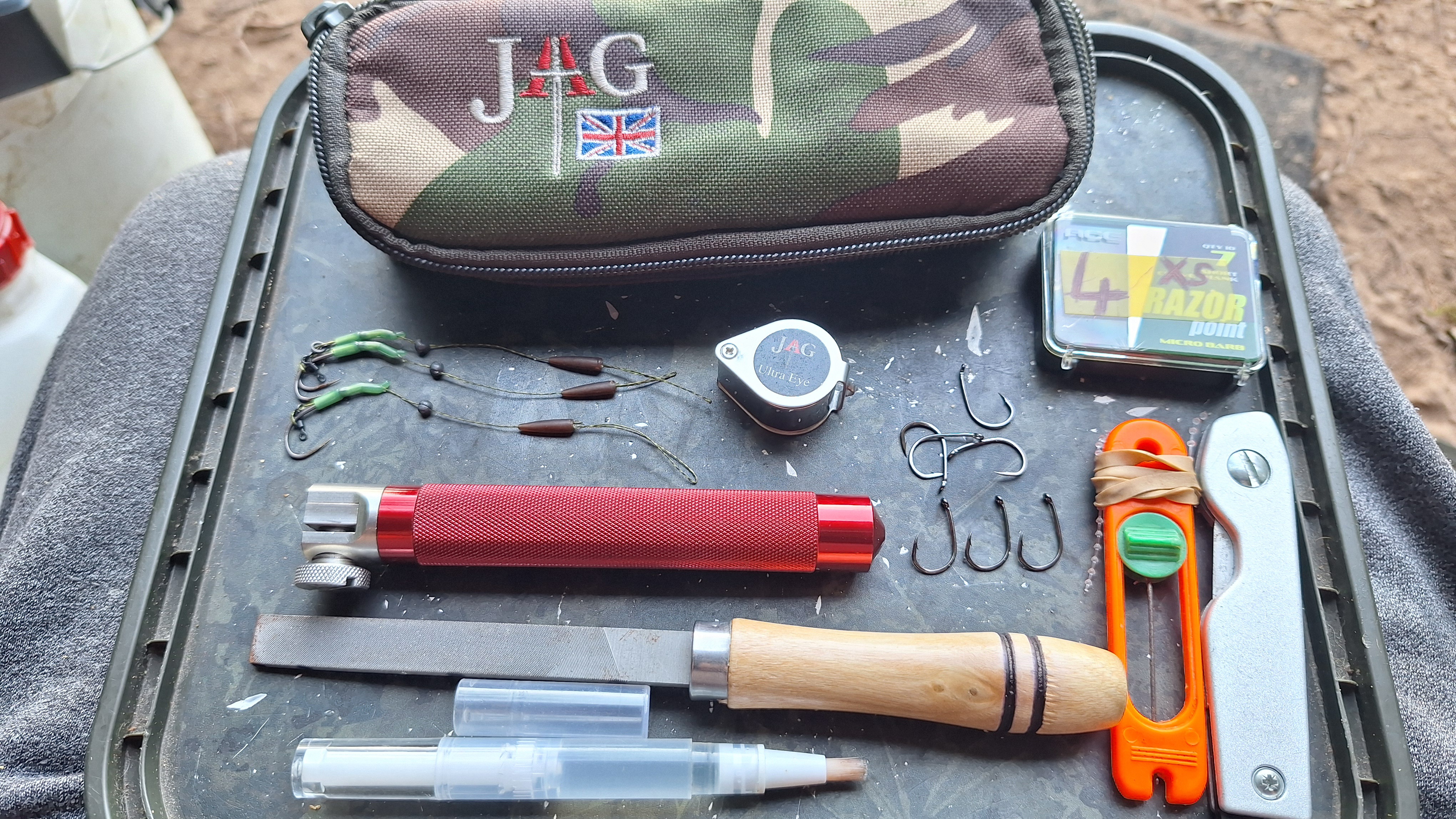
In reply to Post #47
Following on from this, I was in Aldi's yesterday and they have been having an "Art" sale, amongst the Specials, on sale is a pack of "6 water tank brushes" identical to what is on Ebay, I think they was £3.49
Following on from this, I was in Aldi's yesterday and they have been having an "Art" sale, amongst the Specials, on sale is a pack of "6 water tank brushes" identical to what is on Ebay, I think they was £3.49
Reading ALL pages