


I know it's the wrong time of the year to be talking about floater fishing, but with a bit more time on my hands I have been sorting through my floater rigs already looking ahead to next year.
Had mixed results during the summer using cork balls, hookable floaters, cut down pop ups etc.
The bit I really struggle with is getting the hookbait to sit tight to the shank of the hook with a hair and boilie stop set up. Also annoys me how it leans over to the side of the hook and wont stay in place on the back of the hook as you would want it to.
Any tips or advice anyone?
Had mixed results during the summer using cork balls, hookable floaters, cut down pop ups etc.
The bit I really struggle with is getting the hookbait to sit tight to the shank of the hook with a hair and boilie stop set up. Also annoys me how it leans over to the side of the hook and wont stay in place on the back of the hook as you would want it to.
Any tips or advice anyone?
In reply to Post #1
There's many different options but I super glue the hook bait to the shank of the hook.
I like a trimmed down brown pop up, you can scrape a little channel and glue the hook into it.
There's many different options but I super glue the hook bait to the shank of the hook.
I like a trimmed down brown pop up, you can scrape a little channel and glue the hook into it.

In reply to Post #1
i always as a rule, tie the hair and thread my bait on before whipping the hook on. this way you always get your bait as close as possible to the shank. i normally like to use a really small clear heat shrink kicker just to help the hooking angle a bit.
i always as a rule, tie the hair and thread my bait on before whipping the hook on. this way you always get your bait as close as possible to the shank. i normally like to use a really small clear heat shrink kicker just to help the hooking angle a bit.

In reply to Post #2
That's what I do and works really well
That's what I do and works really well
In reply to Post #1
Cut a v into the bait and superglue it.
Cut a v into the bait and superglue it.
In reply to Post #5
Old Skool
Old Skool
I use the enterprise tackle imitation dog biscuits. They have a counterbalance weight that
keeps your hook out of the water on the opposite side.
They are also good as you can freeline them up to 20 yards or so with the right balanced tackle.
keeps your hook out of the water on the opposite side.
They are also good as you can freeline them up to 20 yards or so with the right balanced tackle.
In reply to Post #7
They are good, but artificial baits are banned by my club.
They are good, but artificial baits are banned by my club.

In reply to Post #1
A small cube of wine cork, mounted d rig fashion, sits perfectly
Hook sits under the bait but has a bit of movement, you can take the 'bait' off to trim or change, have several baits with the upper edge painted to be more visable. A dab of fish oil or hydro keeps the cork really attractive.
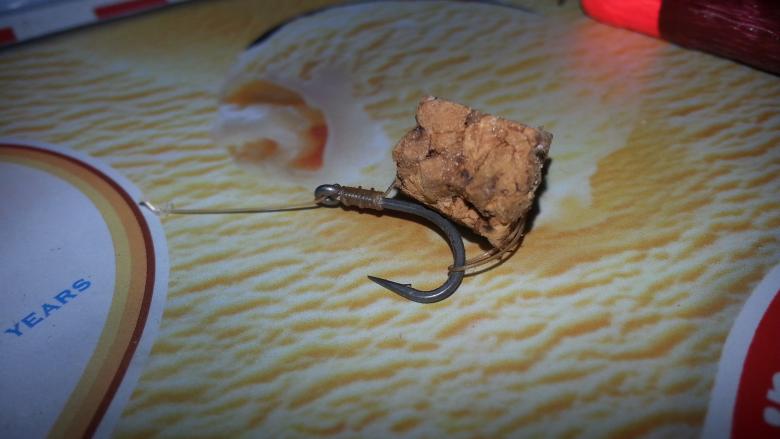
A small cube of wine cork, mounted d rig fashion, sits perfectly
Hook sits under the bait but has a bit of movement, you can take the 'bait' off to trim or change, have several baits with the upper edge painted to be more visable. A dab of fish oil or hydro keeps the cork really attractive.
In reply to Post #9
Kind of reversed D rig. Now thats different. I will be giving that one a try
Kind of reversed D rig. Now thats different. I will be giving that one a try

In reply to Post #10
Just make sure you trim the cork as much as possible, cork is far more bouyant than a mixer or floating pellet so fish can spook when taking because of this. Unless they are really hammering down the floaters you will likely get a lot of aborted takes
Just make sure you trim the cork as much as possible, cork is far more bouyant than a mixer or floating pellet so fish can spook when taking because of this. Unless they are really hammering down the floaters you will likely get a lot of aborted takes

In reply to Post #11
Invariably I use sanded down cork balls, glugged in a 1/5 ratio of hydrolysate and salmon oil, made fresh each year in the spring, I've found using it with a short fairly thick gauge wire hook as well as the impregnation of the cork with liquid ( obvious using a mini vacuum chamber ) it tends to sit quite low. I do use a size 6 for most floater fishing though
Invariably I use sanded down cork balls, glugged in a 1/5 ratio of hydrolysate and salmon oil, made fresh each year in the spring, I've found using it with a short fairly thick gauge wire hook as well as the impregnation of the cork with liquid ( obvious using a mini vacuum chamber ) it tends to sit quite low. I do use a size 6 for most floater fishing though
In reply to Post #12
Sounds nice, but a lot more faffing about than just using a popup or floating pellet
Sounds nice, but a lot more faffing about than just using a popup or floating pellet
In reply to Post #13
slab of white crust.
flick it at a fish.
zzzztztztzzztzzzzzzzzzzzzzzzzzzzzzzzzzzzzz
slab of white crust.
flick it at a fish.
zzzztztztzzztzzzzzzzzzzzzzzzzzzzzzzzzzzzzz
In reply to Post #14
I've found crust can be a great bait, but also it can be like a massive warning flag to the fish on some waters
I've found crust can be a great bait, but also it can be like a massive warning flag to the fish on some waters
Not the wrong time of year at all. On a small club lake they are still taking off the top 
I'm partial to using bread. The nash bread bombs are good and as long as you place the bread in right it'll keep your hook above the water and out the way.
When using pop ups for floater fishing I hair rig them, cut a notch with a Stanley knife or something and slot the shank of the hook in it. Should end up with it sitting flush. As others have said before.
You could always go old school and use a pellet band and a mixer?
I'm partial to using bread. The nash bread bombs are good and as long as you place the bread in right it'll keep your hook above the water and out the way.
When using pop ups for floater fishing I hair rig them, cut a notch with a Stanley knife or something and slot the shank of the hook in it. Should end up with it sitting flush. As others have said before.
You could always go old school and use a pellet band and a mixer?

In reply to Post #1
Large baitband, pierced and positioned on the shank . . much less faff than hairs/hairstops.
Better still - use a stiff rig and 'dapple' with the beachcaster method . . .killer
Large baitband, pierced and positioned on the shank . . much less faff than hairs/hairstops.
Better still - use a stiff rig and 'dapple' with the beachcaster method . . .killer
In reply to Post #12
I've heard mention of these mini vaccum chambers before but never quite got my head around the principle.
Take it your dropping your cork balls into the chamber containing the liquid and sucking the air out.
Two questions: How long do you leave them in the container after you have sucked the air out?
And does cork allow flavours to be sucked into it?
I've heard mention of these mini vaccum chambers before but never quite got my head around the principle.
Take it your dropping your cork balls into the chamber containing the liquid and sucking the air out.
Two questions: How long do you leave them in the container after you have sucked the air out?
And does cork allow flavours to be sucked into it?
In reply to Post #19
I think its the opposite - rather than sucking the air out - you put the air under pressure which forces any liquids into the air gaps in the cork.
I think its the opposite - rather than sucking the air out - you put the air under pressure which forces any liquids into the air gaps in the cork.
In reply to Post #1
Bait band on hook shank and half a pop-up hookbait, pulled tight to shank.
Bait band on hook shank and half a pop-up hookbait, pulled tight to shank.
In reply to Post #19
Band-it Pellet pump . . .match anglers use them for pellets but I use mine for impregnating wooden balls for crayfish rigs . . .
Band-it Pellet pump . . .match anglers use them for pellets but I use mine for impregnating wooden balls for crayfish rigs . . .
Reading ALL pages